Rodent exclusion differs fundamentally from repetitive indoor poisoning: it eliminates the physical pathways animals use to penetrate building envelopes rather than temporarily suppressing numbers. In heavily wooded…
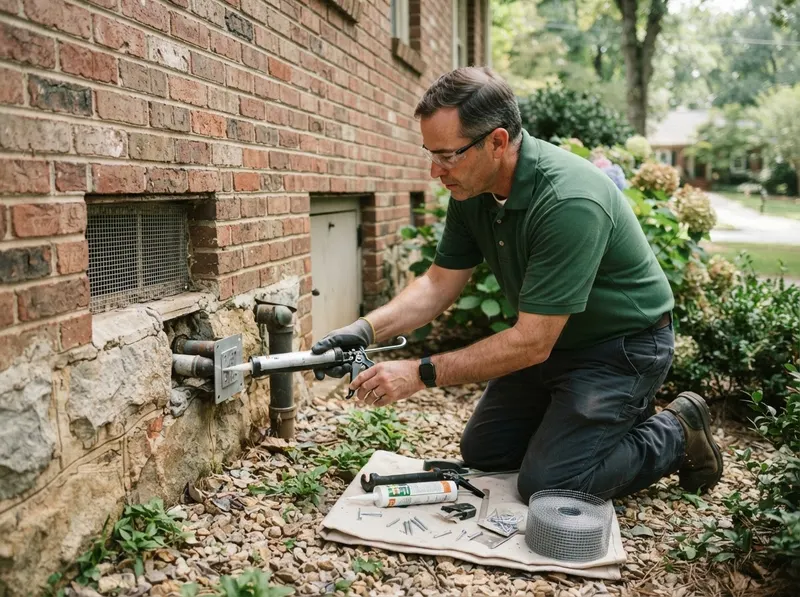
Rodent exclusion differs fundamentally from repetitive indoor poisoning: it eliminates the physical pathways animals use to penetrate building envelopes rather than temporarily suppressing numbers. In heavily wooded Marietta communities like Indian Hills, Chimney Springs, and Somerset, mature hardwoods and dense pine canopies bridge roof rats directly onto architectural shingles, rake edges, and louvered attic vents. Once inside, chewing behaviors damage electrical wiring and compress fiberglass insulation, degrading thermal performance and scattering biological waste above bedroom ceilings. Precision exclusion seals roof-to-fascia junctions, foundation weep holes, and plumbing penetrations using 1/4-inch galvanized hardware cloth, copper mesh, and elastomeric sealants that rodents cannot gnaw through. For properties near riparian corridors like Sope Creek or heavily shaded parcels in Whitlock Heights and Atlanta Country Club, structural sealing prevents recolonization when cold weather drives field populations toward heated foundations.
Selecting structural exclusion over recurring chemical bait programs represents an intentional trade-off between initial remediation scope and ongoing property security. A conventional baiting program demands continuous chemical replenishment and leaves poisoned rodents vulnerable to dying inside wall cavities, causing severe odor issues and fly breeding cycles. In contrast, mechanical exclusion requires hands-on carpentry repairs and targeted exterior trapping grids, which demand higher upfront labor but protect household pets from secondary rodenticide toxicity. Properties adjacent to Kennesaw Mountain National Battlefield Park and older crawlspace constructions across Forest Hills, Battleview, and West Park frequently present multiple foundation gaps caused by settling soil. Step 1 involves identifying every exterior void larger than 1/4-inch. Step 2 applies metal mesh, chimney spark arrestors, and crawlspace door threshold seals. Step 3 installs non-toxic, child-safe mechanical traps in utility areas to extract trapped individuals. Step 4 concludes with attic surface sanitization to neutralize pheromone trails that attract surrounding wildlife.
Every job gets a firm, written price after a free on-site visit.
Tell us about your rodent exclusion and abatement job in Marietta and we'll send a clear, written quote, usually the same day.
 Timberline Pest Control