Subterranean termites nest beneath ground level and tunnel upward through shelter mud tubes to reach cellulose building materials, making foundation-level exclusion the primary defense for Georgia structures. Marietta…
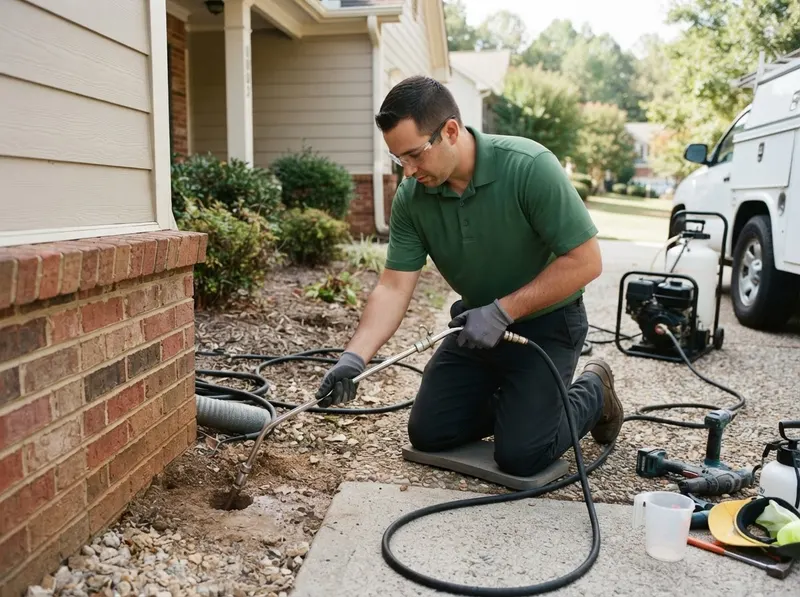
Subterranean termites nest beneath ground level and tunnel upward through shelter mud tubes to reach cellulose building materials, making foundation-level exclusion the primary defense for Georgia structures. Marietta properties situated near dense tree canopies such as Kennesaw Mountain National Battlefield Park and Sope Creek experience substantial moisture retention in surrounding clay, which accelerates colony expansion. Foundations built with vented crawlspaces in historic neighborhoods like Whitlock Heights and Forest Hills present different entry profiles than monolithic slab constructions common in East Cobb subdivisions like Chimney Springs and Somerset. Liquid soil treatments create an undetectable defensive band down to the footing depths, causing worker termites to transfer the active agent throughout the central nest, whereas advanced bait monitoring systems positioned every 10 to 12 linear feet continuously check outer property perimeters.
Selecting a protective protocol depends on foundation layout, soil grade, and localized landscaping features. Homes bordering golf course grounds in Indian Hills and Atlanta Country Club often benefit from integrated subterranean perimeter bait systems when extensive hardscaping, stone patios, or decorative pavers limit continuous trenching. Conversely, a continuous liquid trenching application remains standard when clear foundation soil access exists around exterior walls, such as in older brick ranches around Historic Marietta Square or Battleview. The liquid trenching method provides immediate perimeter soil saturation, whereas baiting systems require worker foraging contact over several weeks before colony suppression occurs.
Treatment execution follows a methodical technical progression to maintain safety for households and companion animals. 1. Technicians inspect foundation walls, sills, floor joists, and plumbing penetrations in crawlspaces to map structural moisture zones. 2. A trench measuring 6 inches wide by 6 inches deep is excavated directly adjacent to the foundation perimeter. 3. Termiticide is applied at an exact calibrated label rate of 4 gallons per 10 linear feet per foot of depth, binding directly with subterranean soil particles so indoor pets and landscaping remain undisturbed once the trench is backfilled. 4. Strategic baiting stations are placed flush with the turf line in active foraging zones to eliminate secondary colonies before they reach crawlspace framing.
Every job gets a firm, written price after a free on-site visit.
Tell us about your subterranean termite treatment job in Marietta and we'll send a clear, written quote, usually the same day.
 Timberline Pest Control